
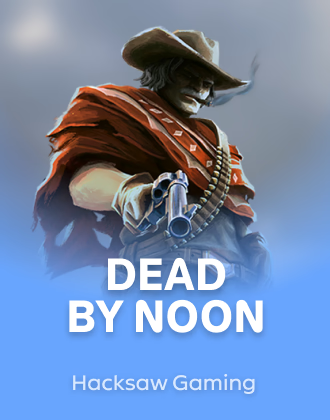

A session on Dead by Noon is built around waiting for the reels to catch fire, then watching them stay that way for a while. Most spins on the 5x4 grid are quiet: symbols land, a small cluster clears, cascades drop new tiles in, and the round ends without much fanfare. That rhythm matches a hit frequency of 21.9%, so stretches of nothing much happening are part of the deal rather than a sign anything is wrong. The pacing plays out as high volatility typically does: long flat spells punctuated by sudden, disproportionate spikes.
The spikes come from Poker Chip symbols. When one lands, it opens a Multiplier Chamber above its reel, revealing a value between 1 and 9. Land Poker Chips across multiple reels in the same cascade sequence and those chamber values concatenate left to right rather than simply adding together, so three chambers showing 4, 5, and 2 don't make a multiplier of 11, they build toward something far larger depending on position and count. In practice this means the difference between a forgettable spin and a session highlight can come down to one extra chip landing on the far reel a beat before the cascade ends.
The two free spin modes change how those chamber sequences unfold rather than just adding spins. Draw or Die triggers off three Free Spin scatters and hands out 8 free spins with a boosted chance of Poker Chips landing on each drop, which means more chambers opening and more chances for a concatenated multiplier to snowball across the round. No Aim, No Fame needs four scatters instead of three, and trades spin count for certainty: 10 free spins with at least one guaranteed Poker Chip on every single spin. It's a straightforward volatility fork within the bonus itself, Draw or Die leans on variance to occasionally overperform, No Aim, No Fame removes the dead-spin risk and lets the chamber math compound more reliably.
Sitting above both is High-Roller FeatureSpins, a feature buy priced at 1,000x the current stake. Paying in skips straight to a round where landing at least one Wanted Poster symbol on every reel pays the slot's full 10,000x ceiling. It's an expensive door to walk through, but it's the most direct route to the number that defines this game, and it turns the session-experience question into a binary one: grind the base game's cascades and hope a chamber sequence gets loud, or pay upfront for a single shot at the top prize.
What the numbers mean at the table
The published RTP of 96.27% sits close to a $1 spin returning a fraction under a dollar over a very long run, which tells you little about any single session but frames why the swings matter more than the average here. A $1 spin chasing the full 10,000x would in theory be looking at a $10,000 return, though that ceiling is walled off almost entirely behind the Wanted Poster sequence in the bonus buy round rather than something the base game regularly threatens. Betting stretches from $0.10 to $100 a spin, giving room to test the cascades cheaply before committing to anything resembling the feature buy price tag.
Who should sit down for this one
Dead by Noon suits players who already understand what high volatility feels like in practice, and who don't mind a hit frequency in the low twenties punctuated by long flat runs. The Multiplier Chamber concept gives the base game more texture than a straight pay-and-cascade slot, since every Poker Chip landing carries the possibility of triggering a concatenation that changes the shape of the round. It isn't built for players wanting frequent, steady returns, and the 1,000x buy-in for the guaranteed shot at the ceiling prize will be out of reach for casual budgets. This is a slot for patient, high-stake-tolerant spins where the reward for sitting through the quiet stretches is a mechanic genuinely capable of paying out five figures in multiplier terms.
Bottom Line
Whether Dead by Noon is worth your time depends on your tolerance for variance and how the theme reads to you. Players who want the slot's specific feature mix and accept the volatility profile will find consistent engagement here; players who prefer steadier, lower-ceiling action should look at lower-volatility alternatives. The math model and feature design tell you who this is for, the choice to spin is yours.


